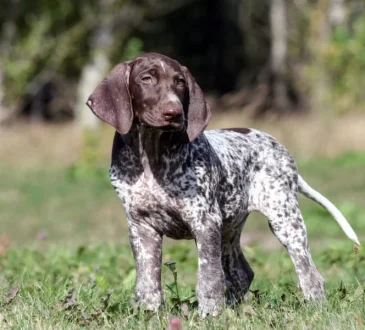


Training a protection dog is not an exercise in making a dog more aggressive. It is a disciplined process built on control, stability, and sound judgement. That distinction is often missed by people who see highly polished demonstrations online and assume the work is mainly about bite training. In practice, the hardest part is producing a dog that can remain calm in ordinary family life while also responding reliably under pressure. A dog that cannot switch off in the home, around visitors, or near children is not a finished protection dog, no matter how impressive it looks on a training field.
This is why experienced handlers place so much emphasis on temperament, structure, and early education. The dog must be confident without being reckless, responsive without being nervy, and serious without becoming unpredictable. Those standards matter whether the dog is destined for a professional role or trained as one of the growing number of personal protection dogs sought by households that want an added layer of security. The work is demanding because the margin for error is small. An ordinary obedience problem can be inconvenient; a protection training problem can have wider consequences for safety, legality, and long-term welfare.
A professional dog trainer from https://www.totalk9.co.uk/ advises that owners should focus first on stability, obedience, and suitability rather than appearance or breed reputation alone. In their view, the best outcomes come when personal protection dogs are selected and trained with equal attention to temperament, family environment, and handler consistency, because protection without control is not protection at all.
The challenge for trainers is therefore not simply to teach a dog to engage with threat. It is to build a reliable decision-making framework in the dog and the handler at the same time. That framework takes time, repetition, and honest assessment. Shortcuts usually create the very problems that professional training is meant to prevent. When trainers speak candidly about the job, they usually return to the same point: the work is difficult not because dogs cannot learn it, but because the standard required is much higher than many people realise.
Challenge one: finding the right dog in the first place
The first and perhaps most decisive challenge is selection. Not every strong, athletic, or confident dog is suitable for protection work. Trainers look for a combination of nerve, resilience, recoverability, social balance, and trainability. A dog may have drive and courage but still lack the emotional steadiness needed to live safely in a domestic setting. Another may be obedient and affectionate yet too soft to cope with the pressures involved in controlled protection exercises. The difficulty is that these traits do not always reveal themselves in the same way at every age, and surface behaviour can mislead inexperienced owners.
Breed matters, but only to a point. Certain breeds have stronger histories in working roles, yet there is no guarantee that an individual dog will possess the right character. Good trainers assess what the dog does after stress, how quickly it recovers from uncertainty, whether it remains clear-headed around novelty, and how willing it is to work with a handler. These signs tell a more useful story than simple boldness. A dog that rushes forward noisily may look convincing, but if that response comes from poor nerves rather than confidence, training becomes harder and riskier.
This selection problem is compounded by owner expectation. Some people want a family companion that will become a serious deterrent with minimal effort. Others want visible guarding behaviour and mistake suspicion for quality. In reality, the most workable dogs often appear unremarkable to a casual observer because they are balanced rather than theatrical. They can settle, socialise appropriately, and take direction. From a trainer’s perspective, that emotional steadiness is far more valuable than exaggerated displays of intensity. It is also why careful evaluation at the beginning can save months of unsuitable work later.
Challenge two: building control before adding pressure
A second major challenge is resisting the temptation to move too quickly into advanced protection scenarios. Trainers know that engagement work, defensive routines, and controlled bite exercises only make sense when the dog already has strong foundations in obedience, neutrality, and impulse control. Without that groundwork, protection training tends to magnify flaws that might otherwise remain manageable. Pulling on the lead, breaking position, overreacting to movement, and failing to disengage on cue all become much more serious once the dog is taught that certain confrontations are meaningful.
Control is not glamorous, which is one reason it is often undervalued. Yet the dog’s down stay, recall, release, heelwork, and ability to ignore distractions are what make the rest of the programme safe. Trainers spend long periods shaping these behaviours under different conditions because a dog that obeys in a quiet hall is not necessarily reliable in a car park, at a front gate, or during a high-stress training exercise. The standard must hold when the dog is excited, startled, or frustrated. That takes repetition and careful progression, not just occasional success.
Handlers are part of this challenge as well. Protection dogs do not operate independently of the people living with them. A trainer may produce solid results in a controlled setting, but those results can unravel if the owner is inconsistent, unclear, or easily rattled. Much of the real work lies in teaching handlers how to communicate properly, reward correctly, and avoid accidental reinforcement of unwanted behaviour. Dogs read ambiguity quickly. If the handler hesitates at critical moments, the dog may start making its own decisions. In protection work, that is precisely what the training is supposed to prevent.
Challenge three: teaching discrimination instead of suspicion
One of the most misunderstood aspects of protection training is the need for discrimination. A finished dog should not treat every unfamiliar person, loud noise, or abrupt movement as a threat. It must learn to distinguish normal social life from a situation that genuinely calls for controlled action. This is difficult because training has to prepare the dog for confrontation without encouraging indiscriminate suspicion. Poorly handled programmes can produce a dog that is over-alert, difficult to settle, or reactive in everyday settings. That is not useful protection; it is poor emotional regulation dressed up as seriousness.
To avoid that outcome, trainers expose dogs to a wide variety of neutral experiences. The dog learns that joggers, delivery drivers, visiting relatives, traffic, crowded pavements, and routine household movement are not invitations to escalate. This neutrality is not passive. It is actively taught, rewarded, and reinforced. The dog must understand that staying composed is part of the job. Then, within tightly structured exercises, the trainer introduces clear cues, controlled scenarios, and consistent rules about when engagement is appropriate. The dog is not simply being made sharper; it is being taught context.
This balance is especially important in family homes. A dog that cannot distinguish between rough play, an argument, or an actual intrusion can become a liability. The stronger and more capable the dog, the higher the responsibility on the trainer and owner to maintain clarity. Good programmes therefore spend significant time on thresholds, permission, and de-escalation. The goal is not a permanently suspicious animal but one that can move from calm observation to controlled response only when required. That level of discrimination is hard to achieve and even harder to maintain without disciplined handling over time.
Challenge four: managing drive, stress, and recovery
Protection training places dogs under controlled stress, and one of the hardest tasks is keeping that stress productive rather than damaging. Trainers need to develop intensity without tipping the dog into confusion, panic, or chronic over-arousal. Different dogs carry stress differently. Some show it outwardly through vocalisation, frantic movement, or conflict behaviours. Others appear composed but begin to deteriorate in grip quality, obedience, or recovery time. Recognising these signs is a skill in itself, and it often separates seasoned trainers from people who focus only on outward performance.
Drive is useful because it powers the work, but unmanaged drive can cause problems. A dog that remains too high after training may struggle to settle at home. A dog that rehearses frustration without clear outlets may become noisier, pushier, or less responsive. This is why professional programmes include rest, decompression, and plenty of ordinary life alongside formal sessions. Recovery matters as much as engagement. A suitable dog should be able to work hard and then return to a balanced baseline. If it cannot, the trainer has to adjust the plan, reduce pressure, or question whether the role is appropriate.
Physical welfare is part of the same picture. Grip work, explosive movement, and repetitive decoy exercises all place demands on joints, muscles, and teeth. Young dogs in particular can be overfaced if progress is rushed for the sake of dramatic results. Responsible trainers pay close attention to age, conditioning, and the quality of surfaces used during work. They also understand that mental fatigue can impair performance just as much as physical strain. A sound protection dog is built gradually. When training ignores recovery, the price is often paid later in behaviour, health, or both.
Challenge five: maintaining reliability in real life, not just in training
The fifth challenge is proofing the dog beyond the artificial certainty of the training environment. Many dogs can perform neatly when they know the field, the equipment, the decoy, and the sequence of events. Real life is untidier. Distances change, surfaces shift, handlers lose footing, and distractions appear at the wrong time. A dog that only works within familiar patterns is not fully trained. The trainer’s task is to generalise the behaviours so that obedience, restraint, and controlled response remain dependable in less predictable conditions.
This is where scenario work becomes important, but it must be done with care. The aim is not to surprise the dog for entertainment or to create constant tension around the home. It is to test whether the dog can apply its training under varied but structured conditions. Can it remain neutral when someone behaves strangely but is not a threat? Can it hold position while the handler is moving under stress? Can it disengage immediately when told? Can it recover cleanly after the scenario ends? Those questions reveal more about quality than dramatic footage ever could.
Reliability also has a legal and ethical dimension in Britain. Owners of protection-capable dogs cannot rely on intention alone; they must be able to demonstrate responsible management. A dog that behaves impeccably in a professional session but poorly on a public lead walk still presents a serious problem. That is why good trainers insist that protection capability does not replace everyday standards. It raises them. The dog must be trustworthy in the house, around invited guests, during transport, and in ordinary public life. Training is only credible when those everyday behaviours remain solid.
What the ranking really tells us about the job
Taken together, these five challenges show that protection dog training is less about teaching confrontation than about building control through every layer of the dog’s life. Selection comes first because the wrong dog makes every later step harder. Foundation obedience follows because a powerful dog without clear control is unsafe. Discrimination matters because family and community life require judgement, not constant alertness. Stress management protects the dog’s welfare and keeps the work sustainable. Real-world proofing confirms whether the training holds outside ideal conditions. Each stage depends on the others.
For owners, the practical lesson is straightforward. A protection dog should never be chosen or trained on image alone. The visible elements of the work are only the final expression of a much deeper process involving temperament, welfare, handling skill, and long-term consistency. That process is demanding, which is precisely why reputable trainers are careful about what they promise. They know that the best protection dogs are not the ones that appear most dramatic for a few minutes. They are the ones that remain clear-headed, obedient, and stable for years.
That is also why honest professional rankings of training difficulties are useful. They shift attention away from spectacle and towards standards. When a trainer says the hardest part of the job is not creating intensity but controlling it, that is not modesty. It is an accurate reflection of the work. In the end, the value of a protection dog lies in measured reliability. The dog must fit into daily life, respond lawfully and predictably, and remain safe to live with. Anything less may look impressive for a moment, but it falls short where it matters most.