

Any dog owner worries when he or she sees it bring up a meal shortly after having eaten. In some cases, the cause is easy and simple to rectify, whereas in other instances it is an indication of a health issue that requires a vet. Herein lies a description of the typical reasons for dog vomiting after eating (หมากินข้าวแล้วอ้วก), what the owner can observe and when to seek assistance.
Understanding more about dog vomiting after eating
Telling vomiting and regurgitation apart
Not all instances where food is brought up is real vomiting. Vets tend to distinguish between vomiting and regurgitation since their causes may vary. The difference in observation assists owners in outlining the issue. The main differences to observe are:
- Vomiting with effort: Heaving, drooling, and belly contractions prior to vomiting partially digested food or fluid.
- Regurgitation without warning: Food that is easily returned to the mouth not long after eating, and may be accompanied by little or no heaving.
- Appearance of the material: Tube-shaped, undigested food can indicate regurgitation whereas yellow or foamy will occur after vomiting.
- Timing after meals: Noting when after eating it occurs, as this fact can help a vet to narrow down the cause.
Eating too quickly or too much
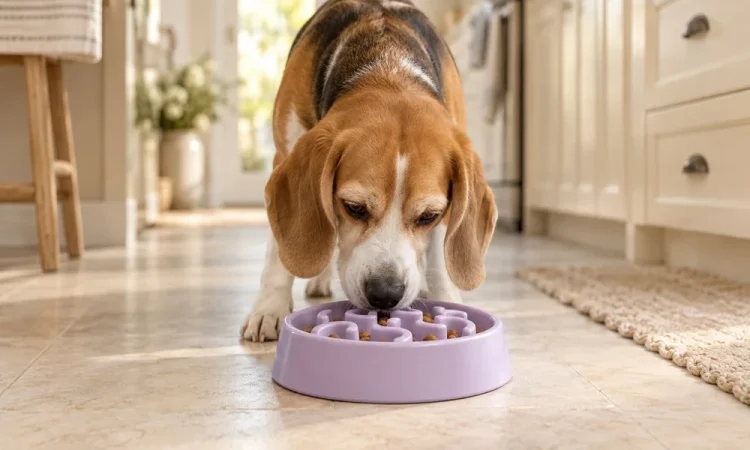
A lot of dogs swallow their food. Speedy eating may result in ingested air and an over-stuffed stomach. It is the easiest to deal with and one of the most common causes. Among the habits that might cause problems are:
- Gulping food rapidly: When one eats food too fast that food and air get to the stomach simultaneously, this can provoke refluxing of food.
- Very large meals: Stuffing the stomach in a single meal, commonly in small dogs or dogs with a fondness of their food.
- Competition at mealtime: Having other pets during eating may cause one to pick up food at a fast rate, which contributes to panic eating.
- Exercise right after eating: Running or play which is intense, immediately after a meal and this can upset the stomach.
Changes in diet, intolerance and inappropriate food
What is poured into the bowl is of importance . Digestion is upset by sudden changes or ingredients that are not appropriate to a dog. Scavenging may even present problems. Diet-related causes include:
- Sudden food changes: Rapid change of foods without giving the gut and bowel to respond to the change can be extremely disturbing to the stomach and bowel.
- Food intolerance or allergy: Reaction to a specific type of ingredients that may cause some form of digestive issue, itchiness, and so on.
- Eating rubbish or scraps: Scavenging up spoilt or leftover food which is fat or hard to digest.
- Eating grass or non-food items: Swallows something that irritates the stomach, or causes blockage in a few cases.
- Toxic foods: It may include such products as chocolate, grapes or onions, which can be lethally poisonous and which should be immediately reported.
Health conditions that may be involved
When vomiting occurs more than once a day there is an increased likelihood of a medical cause. A number of diseases can impact the stomach, oesophagus or other organs. It can only be diagnosed by a vet. It may be caused by:
- Gastritis or stomach irritation: Inflammation of the stomach lining that can of course lead to nausea and vomiting after feeding.
- Parasites or infections: Worms, or intestinal infections which upset digestion, primarily in puppies and unvaccinated dogs.
- Oesophageal problems: This is related to conditions, which involve the food pipe and lead to regurgitation immediately after eating.
- Pancreatitis and other organ disease: Diseases with the ability to result in vomiting besides fatigue, pain or lack of appetite.
- Blockages: Are items like items that are swallowed but obstruct the stomach or intestines, this should be a medical emergency.
Recognizing signs that need urgent attention
Certain symptoms cannot be overlooked. Timely intervention can do the world of good. Although unsure, it is always a good idea to call a vet. Warning signs include:
Repeated or continuous vomiting: Throat vomiting more than once, not being able to swallow food or water.
Blood or unusual material: Red, black, or coffee-ground-appearing vomit, or vomit which has a bad smell.
Swollen or painful belly: It is a bloated and tight belly, with no productive retching, or fidgeting, with lots of deep-chested dogs.
Weakness or dullness: Gums sallow, collapses or signs of dehydration along with vomiting.
Very young, old, or unwell dogs: Puppies, elderly people and those with underlying illnesses which may worsen in a very short time.
A look at the frequently asked questions
Can vomiting that follows eating be serious?
No, but recurrent events should be seen by the vet.
Is it possible to get vomited because of eating too fast?
Yes, it is a typical cause of gulping food.
What is regurgitation?
Food is not difficult to come up with without heaving.
In case a dog has been vomiting, should it be fed again?
With continuing vomiting, ask a vet.
What is an emergency in vomiting?
Bloating, blood, collapse or recurrent vomiting requires immediate attention.