
Multi-Pet Household Flea Prevention Guide: How Families With Dogs and Cats Can Reduce Parasite Risks

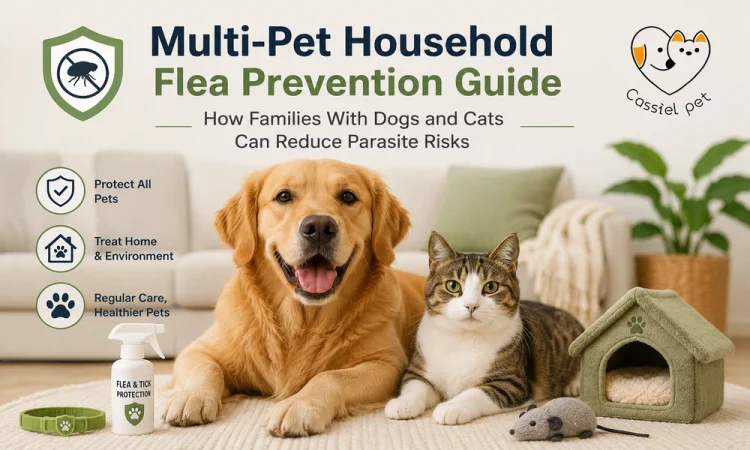
Article Summary: Managing fleas in a home with multiple pets can be more challenging because dogs and cats often share the same environment, bedding areas, and daily routines. When one pet encounters fleas, other animals in the household may also face exposure risks. This guide explains why multi-pet homes require a more complete parasite prevention approach, including environmental awareness, consistent pet care habits, and choosing suitable flea and tick management strategies for different animals.
For families with multiple pets, keeping dogs and cats healthy often requires more planning than caring for a single animal. Shared living spaces, common sleeping areas, and daily interactions mean that parasite problems can affect the entire household rather than just one pet.
Fleas are one of the most common challenges in multi-pet homes because these parasites can move between animals and survive in household environments. A dog that spends time outdoors, for example, may unintentionally introduce flea exposure into a home where indoor cats also live.
Understanding how fleas spread between pets and how to build a consistent prevention routine can help owners create a healthier environment for every animal in the family.
Why Multi-Pet Homes Face Greater Flea Challenges
Homes with multiple pets naturally create more opportunities for parasite exposure. Dogs and cats often share the same spaces, including beds, carpets, furniture, and play areas.
When one pet encounters fleas, the issue may not remain limited to that individual animal. Fleas can move between hosts and their different life stages may exist in the surrounding environment.
This is why treating only the pet showing visible signs may not always address the broader household situation.
A complete approach considers the entire environment and the lifestyle of every pet living in the home.
How Fleas Spread Between Dogs and Cats
Fleas do not require direct contact between animals to spread. They can move through shared environments where pets spend time.
Common situations that increase flea exposure risks include:
- Dogs returning from outdoor activities
- Pets sharing bedding or resting areas
- Multiple animals using the same indoor spaces
- Visits to parks, boarding facilities, or pet-friendly locations
- Contact with other animals carrying fleas
Because dogs and cats have different behaviors and lifestyles, owners should consider the individual needs of every pet while managing household parasite risks.
Why Treating Only One Pet May Not Be Enough
A common mistake in multi-pet households is focusing only on the animal where fleas are first noticed.
For example, a cat may appear to have a flea problem, but a family dog may also have been exposed through outdoor activities. Similarly, a dog with occasional scratching may not be the only pet affected.
A household approach means evaluating all pets, their environments, and their daily routines.
This does not mean every pet has identical needs. Instead, it means owners should create a parasite care plan that considers the whole household.
The Importance of a Consistent Flea Prevention Routine
Consistency is one of the most important parts of managing flea risks in homes with multiple animals.
A prevention routine may include:
- Regularly checking each pet’s coat and skin
- Cleaning bedding and resting areas
- Monitoring scratching or grooming changes
- Considering each pet’s outdoor exposure
- Following appropriate parasite care schedules
Small habits performed consistently can make it easier to notice changes early and respond before flea concerns become more difficult to manage.
Choosing Flea Care Options for Different Pets
Dogs and cats may live together, but they are not identical animals. Their size, behavior, lifestyle, and care requirements can vary significantly.
When choosing flea care options, owners should consider:
- The pet’s species
- Age and size considerations
- Indoor or outdoor lifestyle
- Existing parasite exposure risks
- Household environment
Understanding different parasite management approaches can help owners create a more suitable routine for their individual pets. More information about flea and tick care for dogs and cats can help pet owners explore different prevention considerations for multi-pet households.
Outdoor Dogs and Indoor Cats: A Common Household Scenario
One of the most common situations in multi-pet homes is having an outdoor dog and an indoor cat.
Although the cat may never leave the house, the dog’s outdoor activities can create additional exposure opportunities. Parks, gardens, hiking areas, and contact with other animals may increase the chance of bringing parasites indoors.
This is why parasite awareness should consider the lifestyle of every animal, not only the pet showing obvious signs.
Environmental Care Is Part of Flea Management
Pet care does not stop with the animal itself. The home environment also plays an important role in managing flea risks.
Helpful environmental habits include:
- Washing pet bedding regularly
- Cleaning areas where pets frequently rest
- Vacuuming carpets and furniture
- Paying attention to areas where pets spend the most time
Combining pet care with household awareness creates a more complete approach to flea management.
Understanding Topical Flea and Tick Solutions
Many pet owners choose topical solutions because they offer a convenient way to support external parasite care.
Spot-on products are designed for external application and are commonly considered as part of broader flea and tick prevention routines.
For owners researching topical approaches, Avermectin-based flea and tick drops for dogs and cats are one example of a spot-on parasite care option that pet owners may explore when considering external parasite management.
Building a Healthier Home for Multiple Pets
A multi-pet household requires more than simply responding when problems appear. The most effective routines are usually based on awareness, consistency, and understanding each pet’s individual lifestyle.
By monitoring pets regularly, maintaining clean environments, and learning about parasite risks, owners can create a more comfortable living space for both dogs and cats.
Final Thoughts
Flea prevention can be more challenging in homes with multiple pets, but understanding how parasites spread makes management easier.
The key is viewing flea care as a household responsibility rather than an issue affecting only one animal. With consistent observation, appropriate care choices, and environmental awareness, families can better support the health and comfort of all their pets.